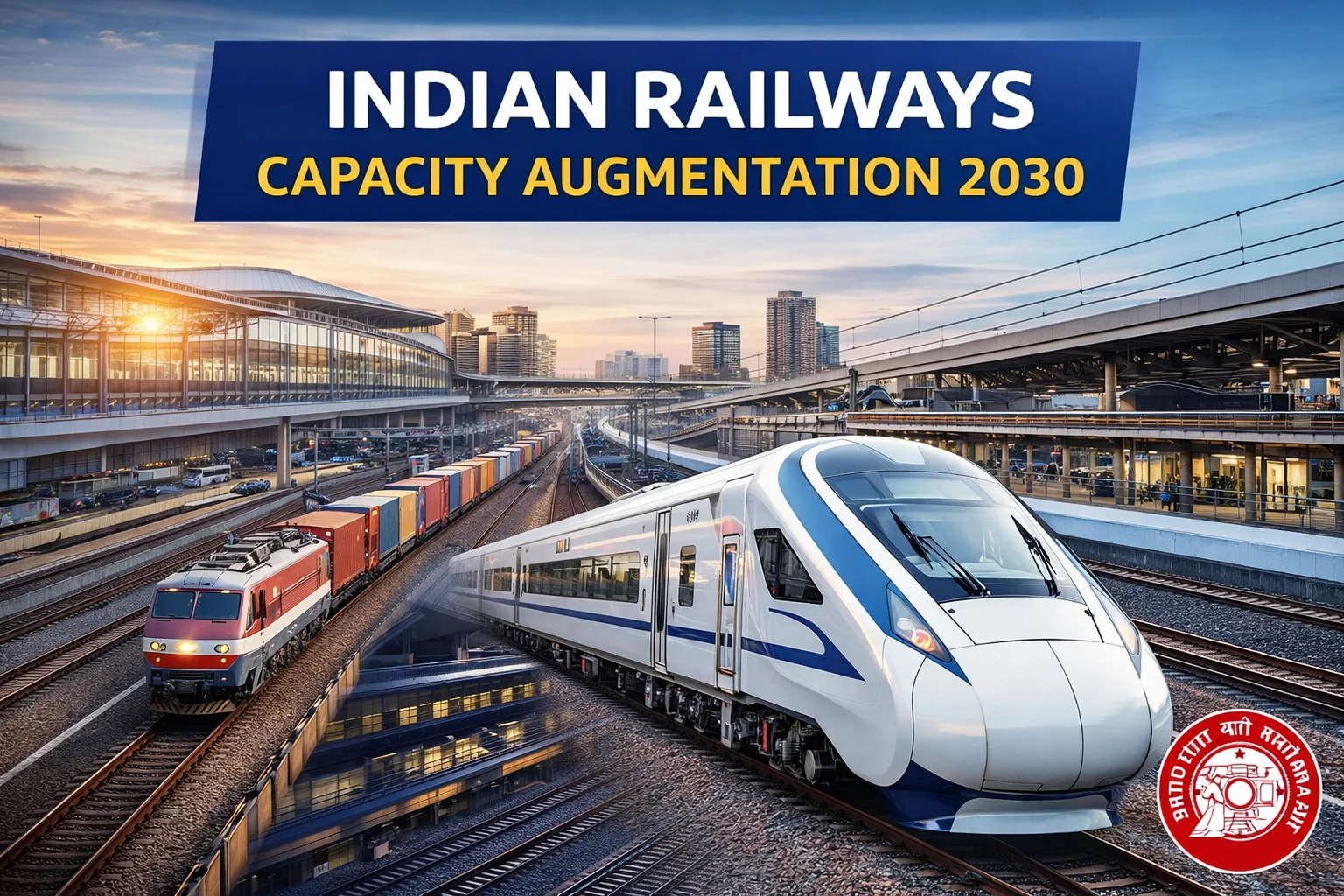
Indian Railways Capacity Augmentation 2030 | Future Rail Infrastructure & Growth Plan
India’s transport backbone is going through one of the biggest transformations in its history. The phrase Indian Railways capacity augmentation 2030 is not just a policy headline. It reflects a long-term vision to make rail transport faster, safer, greener, and capable of handling the country’s growing population and economy.
By 2030, India aims to significantly expand railway capacity across passenger and freight segments. This includes new tracks, upgraded stations, modern trains, and advanced technology. In this article, we break down what capacity augmentation means, why it matters, and how it will reshape India’s rail network over the next few years.
What Does Capacity Augmentation Mean in Railways?
Capacity augmentation refers to increasing the ability of the railway system to carry more passengers and freight efficiently. For a network as vast as Indian Railways, this involves multiple parallel efforts:
- Adding new railway lines
- Doubling and tripling existing tracks
- Upgrading signaling systems
- Improving rolling stock like locomotives and coaches
- Modernizing stations and yards
The goal is simple. Reduce congestion, improve punctuality, and support faster economic growth.
Why Indian Railways Needs Capacity Expansion by 2030
India’s demand for transport is rising rapidly. Passenger numbers grow every year, and freight movement is critical for industries like coal, steel, cement, agriculture, and e-commerce.
Some key reasons driving Indian Railways capacity augmentation 2030 include:
- Overcrowded routes on major corridors
- Slow freight movement due to mixed traffic
- Increasing urbanization and intercity travel
- Need to reduce logistics costs
- Climate goals pushing transport from road to rail
Without large-scale expansion, the existing system would struggle to keep up with future demand.
Dedicated Freight Corridors: The Backbone of Growth
One of the most important pillars of capacity augmentation is the development of Dedicated Freight Corridors (DFCs). These are high-capacity, freight-only railway lines designed to move goods faster and more efficiently.
Key benefits of freight corridors include:
- Separation of passenger and freight traffic
- Higher axle load and longer trains
- Faster average freight speeds
- Reduced congestion on existing tracks
By 2030, freight corridors are expected to carry a major share of India’s rail cargo, freeing up existing lines for more passenger trains.
Track Doubling, Tripling, and New Lines
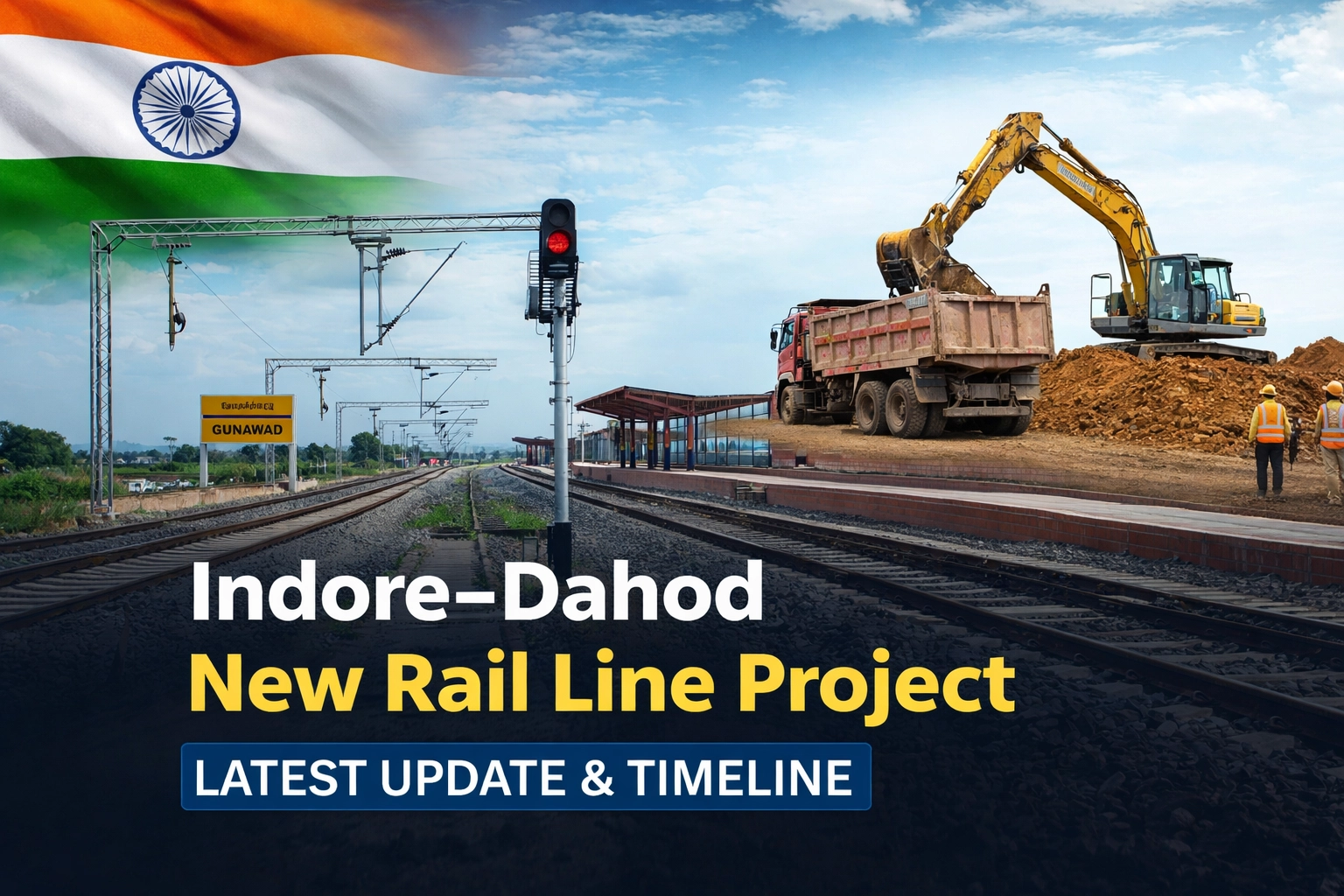
A large part of Indian Railways capacity augmentation 2030 focuses on physical infrastructure. This includes:
1. Track Doubling and Tripling
Busy routes with high traffic density are being upgraded with additional tracks. This allows more trains to run simultaneously and reduces delays caused by crossings.
2. New Railway Lines
New lines are being built in underserved and strategic regions. These help connect remote areas, promote regional development, and reduce pressure on existing routes.
3. Gauge Conversion and Electrification
Broad gauge conversion and 100 percent electrification increase efficiency, reduce fuel costs, and support higher speeds.
Modern Signaling and Technology Upgrades
Capacity is not only about tracks. Technology plays a huge role in increasing throughput without laying new lines everywhere.
Key technology upgrades include:
- Automatic signaling systems
- Electronic interlocking
- Train collision avoidance systems
- Centralized traffic control
Modern signaling allows trains to run closer together safely, increasing line capacity and improving punctuality.
Station Redevelopment and Passenger Facilities
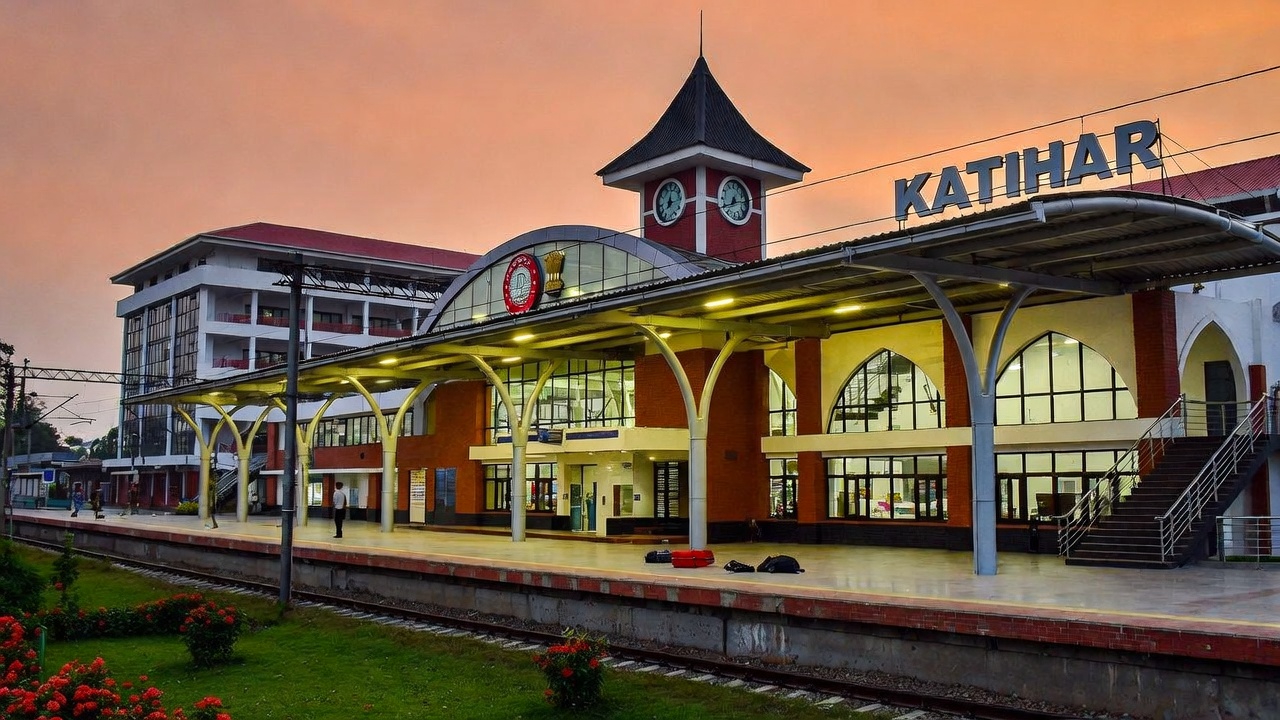
Stations are no longer just boarding points. Under the 2030 vision, stations are being transformed into modern transport hubs.
Improvements include:
- Wider platforms and better circulation areas
- Modern waiting halls and amenities
- Digital information systems
- Better integration with metro, buses, and taxis
Station redevelopment helps manage rising passenger volumes and improves the overall travel experience.
High-Speed and Semi-High-Speed Trains
Another important element of Indian Railways capacity augmentation 2030 is faster trains. High-speed and semi-high-speed services reduce travel time and increase line utilization.
Examples include:
- Faster intercity train services
- Modern trainsets with quick acceleration
- Reduced turnaround time at terminals
By moving more passengers in less time, the same infrastructure can serve a larger demand.
Freight Modernization and Logistics Efficiency
Freight is the financial backbone of Indian Railways. Capacity augmentation by 2030 focuses heavily on making freight more competitive.
Major initiatives include:
- Private freight terminals
- Improved loading and unloading facilities
- Multimodal logistics parks
- Time-tabled freight services
These steps aim to reduce logistics costs and attract cargo currently moving by road.
Environmental and Economic Impact
Indian Railways capacity augmentation 2030 is closely linked to sustainability goals. Rail transport is far more energy-efficient and cleaner than road transport.
Key benefits include:
- Lower carbon emissions
- Reduced fuel consumption
- Less road congestion
- Improved air quality
Economically, better rail capacity supports manufacturing, agriculture, and trade by ensuring reliable and affordable transport.
Challenges on the Path to 2030
While the vision is ambitious, challenges remain:
- Land acquisition delays
- Funding and project execution timelines
- Coordination between states and agencies
- Managing upgrades without disrupting existing services
Addressing these challenges requires strong planning, monitoring, and use of modern project management practices.
What Indian Railways Could Look Like in 2030
If current plans stay on track, Indian Railways by 2030 will look very different from today.
We can expect:
- Faster and more reliable passenger services
- Efficient, high-capacity freight corridors
- Modern stations and digital systems
- A greener and more sustainable transport network
Indian Railways capacity augmentation 2030 is not just about trains and tracks. It is about preparing India’s transport system for the next generation.
Final Thoughts
The journey toward Indian Railways capacity augmentation 2030 is already underway. With massive investments in infrastructure, technology, and modernization, the rail network is being reshaped to meet future demands.
For passengers, this means shorter travel times and better comfort. For businesses, it means faster and cheaper logistics. For the nation, it means sustainable growth and stronger connectivity.
As 2030 approaches, Indian Railways stands at the center of India’s development story, moving the country forward one track at a time.